
The Law’s Convenient Story
The Big SleepPolice officials and Marlowe negotiate a public account that solves visible murders while suppressing the Sternwood connections.
increasing Bearing strength in each event
 decreasing
Bearing strength in each eventdecreasingOhls Investigates the Pier
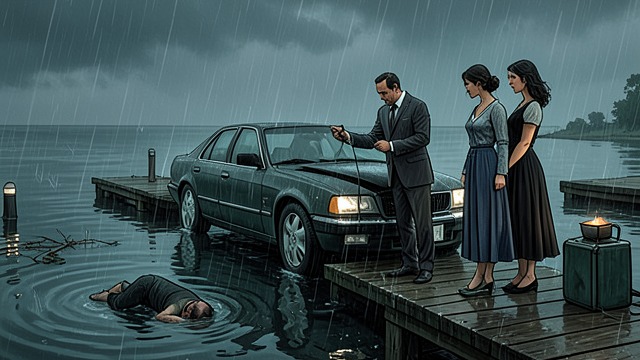
Ohls Investigates the Pier
A body recovered
Bernie Ohls examines Owen Taylor’s Buick at Lido Fish Pier and confirms that the driver is dead. The evidence suggests both a car plunge and a blow to the head.
A limited inquiry
Ohls asks Philip Marlowe about the Sternwood family and Regan. Marlowe conceals his knowledge of Taylor’s connection to Geiger’s house.
A Jurisdictional Clash
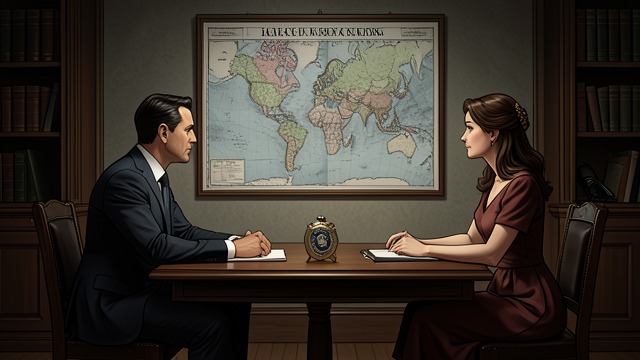
A Jurisdictional Clash
Two police offices meet
At Taggart Wilde’s home, Bernie Ohls brings Carol Lundgren to a meeting with Captain Cronjager. The two jurisdictions dispute who knew what and when.
Blame and responsibility
Cronjager accuses Marlowe of withholding a murder and enabling a second. The argument exposes how procedure and personal judgment collide.
The Narrow Disclosure
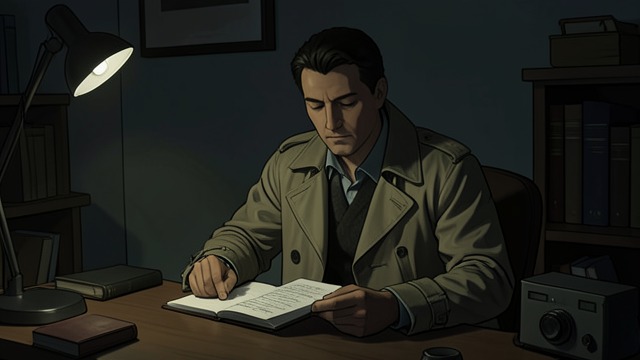
The Narrow Disclosure
A partial confession
Philip Marlowe recounts the killings but omits Carmen Sternwood’s visit to Brody and Eddie Mars’s visit to Geiger. He does not claim that his account is complete.
A contested duty
Marlowe argues that client confidentiality matters, while Cronjager sees a failure to report murder. Their competing standards remain unresolved.
The Smut Book Bargain
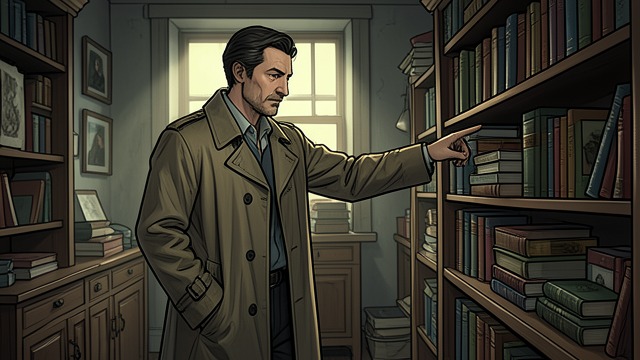
The Smut Book Bargain
Evidence changes hands
Philip Marlowe displays Geiger’s illicit book stock and points out that the police tolerated the storefront. He uses the risk of a grand-jury inquiry as leverage.
A public compromise
The officials accept a restrained account of the murders. Protecting the Sternwoods also protects the authorities from questions about their own conduct.
Newspaper Closure
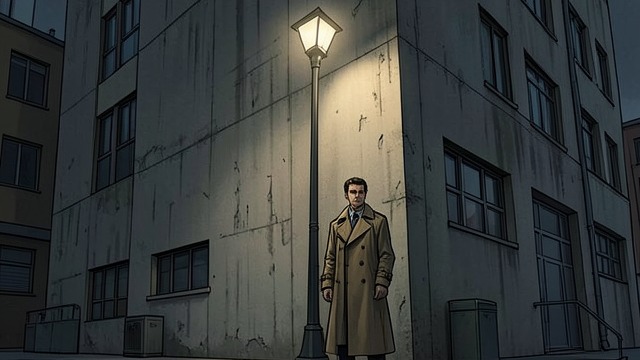
Newspaper Closure
An official success story
Newspapers credit Captain Cronjager with solving the Geiger and Brody murders. They describe Brody as Geiger’s killer and Carol Lundgren as the avenger.
The missing truth
Owen Taylor’s death appears separately as suicide, and the Sternwoods are never named. The public story is neat because the most consequential facts are absent.
the morning after Geiger’s death
the second evening
during the same conference
later during the conference
the following morning
